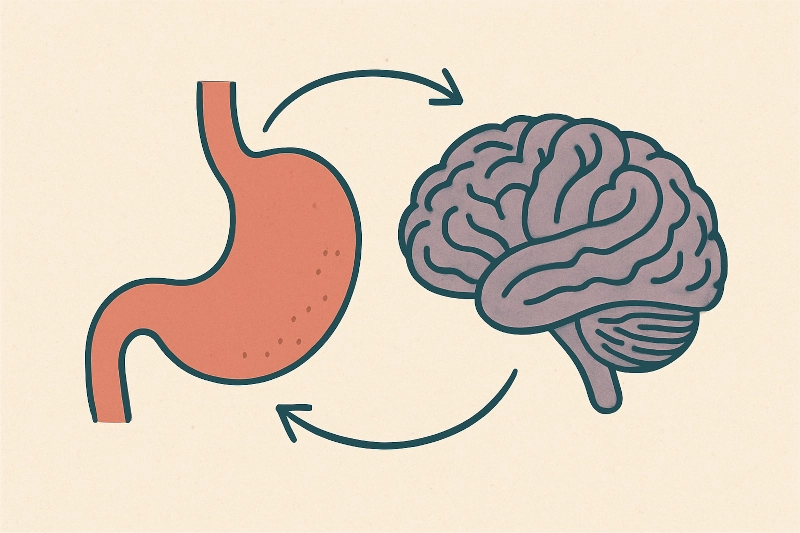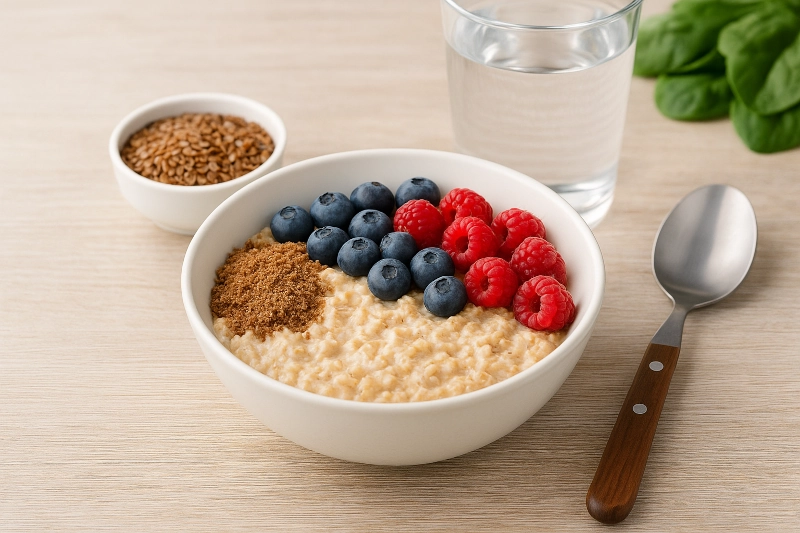
If you've typed "fiber supplements for constipation" into a search bar at 11pm, you already know the category is crowded with gummies, powders, and capsules all claiming to "support regularity." Some of that is backed by real research. A lot of it is marketing dressed up as science. This post walks through which types of fiber actually have evidence behind them for constipation, how much you'd realistically need to take, and where a couple of specific products fit into that picture.
Affiliate disclosure: this post contains affiliate links. If you buy through one, we may earn a commission at no extra cost to you. That doesn't change our take below — we still call out the products we'd skip.

Does Fiber Actually Help With Constipation?
Yes, but with a caveat: not all fiber works the same way, and the research is stronger for some types than others. A 2012 meta-analysis of randomized controlled trials found that dietary fiber supplementation increased stool frequency in people with chronic constipation, though the effect size varied a lot depending on the type of fiber used (Yang et al., 2012, World Journal of Gastroenterology). The mechanism is mostly mechanical: certain fibers absorb water and add bulk and softness to stool, which makes it easier to pass and can shorten transit time through the colon.
Where people get tripped up is assuming "fiber" is one thing. It isn't. The physical properties of a fiber — whether it's soluble, whether it gels, whether it ferments in the gut — determine whether it actually helps constipation or just adds bulk without much benefit (or, in some cases, makes bloating worse without moving anything along).
Not All Fiber Is the Same: Soluble vs. Insoluble
Soluble fiber dissolves in water and can form a gel-like substance in the gut. Insoluble fiber doesn't dissolve and adds bulk to stool as-is. For constipation specifically, the research points toward soluble, gel-forming, low-fermentation fibers as the more reliable performers. A widely cited physiology review breaks this down by viscosity and fermentability rather than the soluble/insoluble label alone, since two "soluble" fibers can behave completely differently in the colon (McRorie & McKeown, 2017, Journal of the Academy of Nutrition and Dietetics). Highly fermentable fibers like inulin get broken down by gut bacteria before they can hold much water, which is part of why they're better known for gas and bloating than for reliably relieving constipation.
The Main Types of Fiber Supplements
Psyllium husk
Psyllium has the deepest evidence base of any fiber supplement for constipation. It's viscous, gel-forming, and only partially fermented, so it holds water through most of the colon instead of getting consumed early by bacteria. It's the fiber most often used as the comparison standard in clinical trials.
Methylcellulose
A semi-synthetic fiber that isn't fermented by gut bacteria at all, which means less gas for people who are sensitive to that. It still forms a gel and adds moisture to stool, though the clinical trial base is smaller than psyllium's.
Wheat dextrin
Common in powdered fiber products marketed as "tasteless" or dissolvable in any drink. It's more fermentable than psyllium or methylcellulose, so it tends to produce more gas, and the evidence for constipation relief specifically is weaker than for psyllium.
PHGG (partially hydrolyzed guar gum) and inulin
Both are popular in blended gut-health formulas because they're gentle-tasting and double as prebiotics. PHGG has some decent trial support for constipation; inulin's evidence leans more toward feeding gut bacteria than relieving constipation, and it's a common culprit behind bloating complaints in fiber blends.
For a broader side-by-side of specific brands across these fiber types, our fiber supplement comparison guide goes deeper into formulation and pricing.
How Much Fiber Supplement Do You Actually Need?
Most of the trials showing benefit for constipation used somewhere in the 5–10 gram range of the specific functional fiber (not total product weight — fillers, flavoring, and other ingredients don't count) taken daily, with water, for at least 1–2 weeks before judging results. This is one of the most overlooked details in this category: a lot of gummy and blend products list a serving size that sounds generous but delivers only 1–2 grams of the actual functional fiber once you read the supplement facts panel. If a label doesn't clearly state the fiber content per serving, that's worth treating as a yellow flag rather than assuming it's "enough."
Fiber Supplements Worth Considering
GoldenFrib
GoldenFrib is positioned as a daily fiber supplement aimed at digestive regularity rather than as a general multivitamin-style gut blend. If you've already read through the fiber types above, the practical question to ask before buying any product like this is the same one: how many grams of functional fiber are in a daily serving, and is that dose close to what the research above actually used? We'd encourage checking the current label on GoldenFrib's own product page rather than taking marketing copy at face value — that's true of every product in this category, not just this one.
Check GoldenFrib's Official Site
SynoGut
SynoGut takes a different approach: it's a broader gut-health blend that combines fiber sources with other ingredients rather than a single-fiber product. That can be useful if you want general gut support alongside fiber, but it also means the fiber dose per serving is usually lower than a dedicated fiber supplement, since label space is shared across more ingredients. If constipation relief specifically is your main goal, compare the actual fiber content per serving against a single-ingredient option before deciding which fits your situation.
Who Should Be Cautious With Fiber Supplements
Fiber supplements are not a fit for everyone, and increasing fiber intake too quickly is one of the most common reasons people give up on them:
- People with a history of bowel obstruction, strictures, or difficulty swallowing should talk to a doctor before starting any bulk-forming fiber, since these products can worsen obstruction risk if not taken with enough fluid.
- People with IBS, especially IBS with a strong bloating component, often do better with low-fermentation fibers (methylcellulose, psyllium) than with fermentable ones like inulin.
- Anyone starting a new fiber supplement should increase the dose gradually over 1–2 weeks and drink enough water with it — taking a full dose on day one without adequate fluid is a common cause of increased bloating or, in rare cases, worsened constipation.
- People on certain medications (some thyroid medications, certain antidepressants, and some diabetes medications) should space fiber supplements a few hours apart from doses, since fiber can reduce absorption of some drugs.
- Pregnant people should check with their OB before adding a new supplement, even one as generally low-risk as fiber.
None of this means fiber supplements are unsafe for most healthy adults — they're one of the better-studied categories in the supplement aisle. It just means "more fiber" isn't automatically the right call for every situation.
The Bottom Line
For constipation specifically, the evidence favors viscous, low-fermentation, gel-forming fibers like psyllium and methylcellulose over highly fermentable ones like inulin. Whatever product you consider, the label detail that matters most is grams of functional fiber per serving — not the ingredient list, not the marketing claims, and not the number of "gut health" buzzwords on the box. If a product's dose looks thin next to the amounts used in actual research, that's a legitimate reason to look elsewhere or supplement with a straightforward psyllium product alongside it.
See GoldenFrib's Current Offer
For related reading, see our Gut Health 101 hub, our breakdown of what works for fast constipation relief, our guide to gentler, natural constipation remedies, and how probiotics fit into digestive health alongside fiber. If you want the full brand-by-brand rundown, our best gut health supplements review covers the wider category beyond fiber alone.
FAQ
How long does it take for fiber supplements to relieve constipation?
Most clinical trials measured results after 1–2 weeks of consistent daily use, though some people notice softer, more regular stools within a few days. Fiber isn't a fast-acting laxative — it works by changing stool consistency over time, not by triggering an immediate bowel movement.
What's the best type of fiber supplement for constipation?
Psyllium husk has the strongest and most consistent research behind it for constipation, followed by methylcellulose. Highly fermentable fibers like inulin tend to cause more gas and have weaker evidence for this specific use.
Can fiber supplements make constipation worse?
Yes, if you increase your dose too quickly without drinking enough water. Fiber needs fluid to do its job; without it, some fiber types can bulk up stool without softening it, which can worsen symptoms temporarily.
Should I take fiber supplements every day or only when I'm constipated?
The research supporting fiber for constipation generally used daily dosing over multiple weeks, not one-off use. Fiber tends to work best as a consistent daily habit rather than an as-needed fix.
Are fiber supplements safe to take long-term?
For most healthy adults, yes — fiber is one of the better-studied supplement categories. People with a history of bowel obstruction, swallowing difficulties, or certain GI conditions should check with a doctor first.
Do fiber gummies work as well as powders for constipation?
Usually not as well, mainly because it's hard to fit an effective fiber dose (5–10 grams) into a gummy format without an unreasonable serving size. Check the actual fiber-per-serving amount on any gummy product before assuming it matches a powder or capsule dose.
References
- Yang J, Wang HP, Zhou L, Xu CF. Effect of dietary fiber on constipation: a meta-analysis. World J Gastroenterol. 2012. pubmed.ncbi.nlm.nih.gov/23261993
- McRorie JW, McKeown NM. Understanding the Physics of Functional Fibers in the Gastrointestinal Tract. J Acad Nutr Diet. 2017. pubmed.ncbi.nlm.nih.gov/28017244