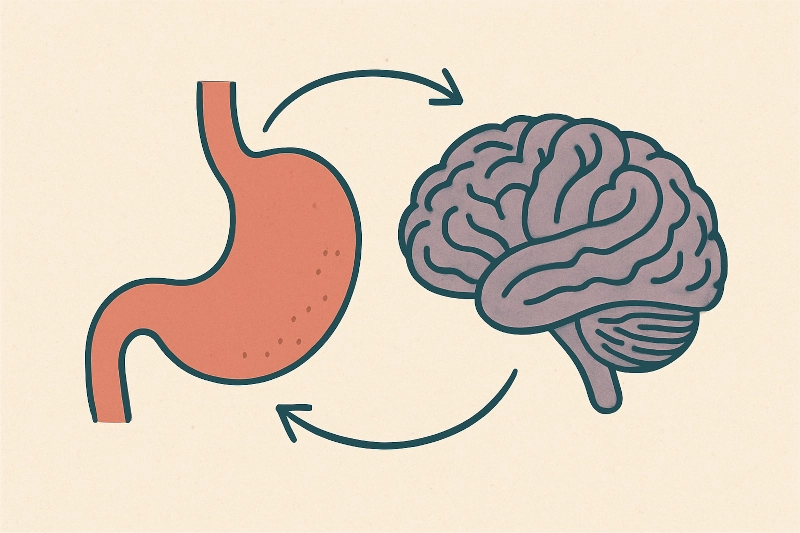

Omega 3 brain health marketing often jumps from a plausible premise to an oversized promise: DHA is part of the brain, so taking more must improve memory. Those are different claims. Randomized trials have tested whether omega-3 supplements improve cognitive performance, and the results give buyers considerably less certainty than the labels suggest.
The buyer’s verdict: omega-3 capsules are not a convincing default purchase for sharper memory in otherwise healthy adults. Some studies report benefits on particular tests, but larger or longer trials have also found no meaningful advantage. The useful question is whether a specific formula, in a specific population, produced a result worth paying for.
Medical disclaimer: This article provides general educational information, not personalized medical advice. Discuss supplement decisions and new or worsening memory concerns with a qualified healthcare professional.
What does “omega-3 for brain health” actually mean?
Omega-3 is a category, not one ingredient. Supplement labels commonly feature DHA, or docosahexaenoic acid, and EPA, or eicosapentaenoic acid. ALA, or alpha-linolenic acid, appears in plant foods and some plant-derived oils. A study using a particular DHA preparation does not automatically establish the same result for every product bearing an omega-3 label.
“Brain health” is similarly broad. It can mean performance on a memory task, attention, everyday functioning, or changes in cognition over several years. These outcomes are not interchangeable. A modest difference on one laboratory test does not establish that buyers will remember appointments more reliably or maintain independence longer.
For the wider evidence landscape, start with our parent guide, Best Memory Supplements: What Research Actually Shows. The same standard applies here: identify the population, intervention, comparison, and measured outcome before accepting the headline.
What the randomized trials found
OPAL: two years of supplementation without a cognitive advantage
The OPAL trial enrolled 867 adults aged 70–79 and compared daily supplementation containing 500 mg DHA plus 200 mg EPA with a control oil for two years. Researchers found no evidence of a cognitive benefit from supplementation in this population. See the original OPAL randomized trial.
That finding matters because it tested a practical purchasing proposition: relatively healthy older adults taking a daily supplement over a meaningful period. The result does not settle every question about omega-3, but it directly challenges broad promises of improved cognition from routine use.
AREDS2: a larger trial also found no significant benefit
The AREDS2 cognitive study followed older adults at risk of advanced age-related macular degeneration. Its omega-3 intervention supplied 650 mg EPA and 350 mg DHA daily. Over approximately five years, supplementation did not significantly change cognitive outcomes compared with no omega-3 assignment. The AREDS2 cognitive trial report describes the findings and study limitations.
This was a specific clinical population, so it should not be presented as a universal answer for everyone. Still, a substantial trial finding no advantage deserves more weight than a testimonial saying someone felt clearer after opening a bottle.
MIDAS: a positive result with narrower implications
The MIDAS trial studied 485 adults aged 55 and older with age-related cognitive decline. Participants received 900 mg DHA daily or placebo for 24 weeks. The DHA group performed better on the study’s primary paired-associate learning measure. The original MIDAS publication reports that result.
This is a reason to avoid dismissing the entire research field. It is not a reason to advertise every fish-oil capsule as a memory enhancer. The participants, DHA dose, duration, and test all matter. A result on that learning measure does not establish broad improvement across everyday cognitive abilities.
Existing cognitive impairment is a separate question
In a randomized trial involving people with mild to moderate Alzheimer’s disease, 2 g of DHA daily did not slow overall cognitive or functional decline over 18 months. That finding appears in the DHA trial published in JAMA.
We include this study to define the evidence boundary, not to make a disease-related product recommendation. Results in people with an established diagnosis cannot simply be transferred to healthy adults, and findings in healthy adults cannot justify disease-related marketing.
Why the studies do not produce one simple answer
These trials tested different questions. OPAL used a DHA-and-EPA combination in relatively healthy older adults. MIDAS tested a higher-DHA intervention in adults selected for age-related cognitive decline. AREDS2 involved a population recruited around eye-health risk. Calling all of them “fish oil studies” hides differences that affect interpretation.
Baseline diet is another consideration when reading research. A trial in people with little seafood intake asks a different practical question from adding capsules to an already varied diet. However, that possibility is not permission to assume that every person who rarely eats fish will experience a memory benefit.
Duration and outcome selection also complicate comparisons. A short study can detect a change on a particular task without telling us what happens over years. A longer trial may evaluate broader cognitive change rather than the same task. The honest conclusion is mixed evidence with important limits, not a universal success story.
Does eating fish prove that fish-oil capsules work?
No. A food pattern and an isolated supplement are different exposures. Even when research links a dietary pattern with better outcomes, that association does not establish that one extracted ingredient caused the difference.
People who eat particular foods may also differ in education, exercise, smoking, healthcare access, or other habits. Researchers can account for some of these differences, but an observational association still does not carry the same causal weight as a well-designed randomized trial.
For buyers, the distinction is straightforward: do not let a brand use evidence about seafood consumption as if it were a clinical trial of its capsule. Ask whether the cited study tested the actual intervention being sold. “Contains nutrients found in fish” and “improves memory” require different evidence.
How to read an omega-3 label without being distracted
Separate total oil from EPA and DHA
A front label stating “1,000 mg fish oil” does not necessarily mean 1,000 mg of EPA plus DHA. Read the Supplement Facts panel and identify each listed amount per serving. Then check how many capsules make up that serving.
This is basic product arithmetic, not proof of effectiveness. A clearly labeled bottle can still be an unnecessary purchase for your goal. Transparency makes evaluation possible; it does not supply a missing clinical benefit.
Do not mistake a study dose for an established effective dose
The trials above used different amounts and combinations, with different results. There is no single dose established by these studies as a reliable memory-improvement prescription for healthy adults. Copying the dose from the most favorable paper leaves out the eligibility criteria, comparison group, and outcome measured.
That also means “cost per effective dose” cannot honestly be calculated for a general memory promise when effectiveness remains uncertain. You can compare cost per stated amount of EPA and DHA, but describe that as a label comparison.
Check what independent testing actually covers
If a brand advertises independent testing, look for the named organization, the product covered, and the scope of verification. A quality check may address composition or contaminants. It does not establish that the supplement improves cognition.
Also distinguish the current product from an ingredient mentioned in a paper. Differences in composition and serving size can make “clinically researched ingredients” a much weaker statement than buyers assume.

Who should be cautious—and who should not self-start?
Safety decisions need more context than a general brain-health article can provide. Before starting an omega-3 supplement, seek individual guidance if you take anticoagulants or other regular medicines, have a bleeding disorder, have a history of atrial fibrillation, or have a procedure planned. The NIH Office of Dietary Supplements omega-3 fact sheet discusses interactions and safety evidence, including findings from high-dose trials.
People with fish or shellfish allergies should check the ingredient source and discuss suitability with their clinician or pharmacist. During pregnancy or breastfeeding, and when considering a supplement for a child, obtain guidance appropriate to that person and the specific formulation. Do not assume that an adult brain-health product is suitable.
Prescription omega-3 products and retail supplements are not interchangeable purchasing decisions. Anyone already using a prescription product should consult their prescriber before adding another source or changing the dose.
New or worsening memory problems also warrant professional assessment rather than a sequence of supplement experiments. This article cannot determine the cause of those symptoms or whether any supplement belongs in your care.
Where omega-3 fits beside other memory supplements
A weak case for one supplement does not establish a strong case for another. If omega-3 evidence disappoints, that is not a reason to assume a multivitamin, botanical blend, or more expensive “brain stack” must perform better.
Our guides to vitamins for memory and multivitamin memory trials examine those separate questions. For help comparing claims across nutrients, see Best Vitamin for Brain Memory and Best Vitamins for Brain Function and Memory.
The same skepticism applies to more dramatic pitches. Pineal XT’s sales narrative includes claims about pineal-gland “decalcification” and opening the “third eye.” Those are the brand’s claims, not conclusions supported by the omega-3 trials discussed here. Evidence for DHA cannot validate an unrelated formula or a spiritual promise.
Readers encountering that pitch can consult our Pineal XT review and our examination of Pineal XT’s “third eye” claims. Our skeptical verdict remains: we would skip it.

The buying verdict
For someone shopping specifically for sharper memory, the evidence does not make routine omega-3 supplementation an obvious purchase. OPAL and AREDS2 found no cognitive advantage under their study conditions; MIDAS reported a more limited positive result in a selected population. That combination supports caution about broad marketing promises.
If a clinician has identified another reason to discuss omega-3, evaluate that reason separately. For a general brain-health purchase, ask what outcome you expect, which trial supports it, and whether that trial resembles your situation. When those answers are vague, keeping your money is a reasonable decision.
FAQ
Does omega-3 improve memory?
Results are mixed. MIDAS reported improvement on a particular learning measure, while OPAL and AREDS2 found no significant cognitive benefit under their study conditions.
Is DHA or EPA better for brain health?
The trials discussed here do not establish a universally superior choice for memory. A DHA-focused positive study does not prove that every DHA product outperforms EPA-containing formulas.
How much omega-3 should I take for memory?
These studies do not establish one reliable memory-improvement dose for healthy adults. A research dose should not be copied as a personal recommendation without considering the study population and your circumstances.
How long does omega-3 take to work for brain health?
There is no dependable countdown to a noticeable memory benefit. Trials lasting months or years have produced different results, and taking a product longer does not establish that it will work.
Are fish-oil and algae-oil supplements equivalent?
Compare the actual EPA and DHA amounts rather than the source name alone. Similar label amounts do not, by themselves, demonstrate equivalent cognitive outcomes or establish a memory benefit.
References
- Dangour AD et al. Effect of 2-y n-3 long-chain polyunsaturated fatty acid supplementation on cognitive function in older people: a randomized, double-blind, controlled trial. American Journal of Clinical Nutrition, 2010. Original OPAL trial.
- Chew EY et al. Effect of omega-3 fatty acids, lutein/zeaxanthin, or other nutrient supplementation on cognitive function: the AREDS2 randomized clinical trial. JAMA, 2015. Original AREDS2 cognitive trial.
- Yurko-Mauro K et al. Beneficial effects of docosahexaenoic acid on cognition in age-related cognitive decline. Alzheimer’s & Dementia, 2010. Original MIDAS trial.
- Quinn JF et al. Docosahexaenoic acid supplementation and cognitive decline in Alzheimer disease: a randomized trial. JAMA, 2010. Original DHA trial.
- NIH Office of Dietary Supplements. Omega-3 Fatty Acids: Fact Sheet for Health Professionals. Supplementary safety and interaction reference. NIH fact sheet.