Affiliate disclosure: This post contains affiliate links. If you click through and buy something, The Buyers Angle may earn a commission at no extra cost to you. That never changes what we tell you — if the evidence says skip a product, we say skip it.
Psyllium husk has been sitting in medicine cabinets since the 1930s, usually under the Metamucil label, usually described with some version of "doctor recommended." That phrase gets used so loosely in the supplement world that it's basically meaningless on its own. So we're asking the boring, unglamorous question nobody selling fiber wants you to dwell on too long: does the actual ingredient do what the label implies, at the doses people actually take, or is this mostly bulk and branding?
Short version: psyllium is one of the few fiber ingredients with genuinely solid trial data behind it for constipation specifically. But "it works" is doing a lot of work in that sentence, and the fine print — dose, water intake, which kind of fiber you're comparing it to — changes the answer a lot. Here's what the research says and where the marketing quietly oversells it.
What Psyllium Actually Is
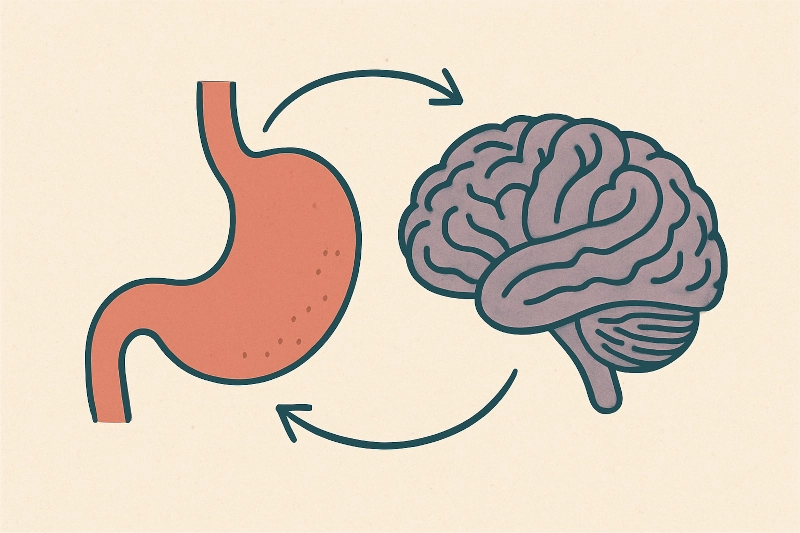
Psyllium comes from the husk of Plantago ovata seeds. It's a soluble, gel-forming fiber — mixed with water, it swells into a viscous gel rather than dissolving or breaking down quickly. That gel-forming property is the whole mechanism: it adds bulk and retains water in the stool, which is mechanically different from fibers that gut bacteria ferment away before they reach the colon in any useful volume.
That distinction matters more than most fiber marketing lets on. A widely cited review of fiber physiology by McRorie and McKeown lays out why not all fibers behave the same way in the gut: highly fermentable fibers (inulin, wheat dextrin) get broken down by bacteria before they can hold onto water, while psyllium's gel resists fermentation long enough to actually bulk and soften stool through the colon. (McRorie & McKeown, J Acad Nutr Diet, 2017) In plain terms: this is a case where the specific fiber matters, not just "fiber" as a category.
What The Trials Actually Show
A meta-analysis pooling multiple randomized trials on dietary fiber for chronic constipation found that fiber supplementation — with psyllium as one of the best-represented types in the pooled data — increased stool frequency and improved stool consistency compared with placebo, with psyllium performing more consistently than bran-type insoluble fibers across the included trials. (Yang et al., World J Gastroenterol, 2012)
That's a real, reproducible effect — not a rounding error. It's also not dramatic. Psyllium is not going to turn chronic, severe constipation around on its own in everyone, and it works more reliably for mild-to-moderate, garden-variety constipation than for constipation tied to an underlying motility disorder or medication side effect. If you've had persistent symptoms for weeks, that's a conversation with a doctor, not a fiber aisle decision.
The Dose On The Label Is Usually Not The Dose In The Studies
This is the part most "best fiber supplement" roundups skip, and it's the actual skeptic's crux of this whole question. Trials showing a real effect typically used somewhere in the range of 5–20 grams of psyllium fiber per day, usually split across two or three doses, each taken with a full glass of water.
Compare that to what's on a lot of consumer products: a single gummy or capsule serving often delivers 2–3 grams of fiber, sometimes less once you account for the fiber blend being diluted with other ingredients. Taking one gummy a day and expecting the results from an 15g/day clinical trial is the same mismatch as taking a quarter of the studied dose of anything and being surprised it's a quarter as effective. The ingredient isn't the lie here — the implied dosing equivalence is.
Water matters just as much as dose. Psyllium's mechanism depends on absorbing water to form that gel. Taken without enough fluid, it does the opposite of what you want — it can thicken and compact rather than soften. This isn't a minor footnote; it's the single most common reason people report psyllium "not working" or making them feel more bloated and blocked up, not less.
If mixing loose powder into a glass of water every day isn't realistic for you, capsule or gummy fiber blends like GoldenFrib are one alternative — just check the actual grams of fiber per serving on the label against the 5–20g/day range the trials above used, and drink water with it regardless of format.
See GoldenFrib's Fiber Facts Panel
Psyllium vs. Other Fibers: Does The Type Matter?
Yes, more than most "just eat more fiber" advice implies:
- Psyllium (soluble, gel-forming): best trial support for constipation specifically; works by retaining water, not by feeding gut bacteria.
- Wheat bran (insoluble): adds mechanical bulk but can worsen bloating and cramping in some people with sensitive guts, and trial results for constipation are more mixed.
- Inulin / FOS (fermentable): useful as a prebiotic for feeding gut bacteria, but because it's fermented before reaching the lower colon, it's a weaker bulking agent for constipation and more likely to cause gas in higher doses.
If constipation relief is the specific goal, psyllium is the better-evidenced pick of the three. If general gut bacteria diversity is the goal, that's a different ingredient and a different post.
Who Should Be Cautious
Psyllium is generally well tolerated, but it's not automatically fine for everyone:
- Swallowing difficulties or esophageal narrowing: psyllium's gel-forming action with insufficient water has been associated with esophageal and bowel obstruction in people with strictures or swallowing disorders — always take with a full glass of water. (MedlinePlus, psyllium drug information)
- Medication timing: psyllium can reduce absorption of some oral medications if taken at the same time. Most guidance suggests spacing other medications at least 1–2 hours apart from a psyllium dose.
- Diabetes: psyllium can affect blood sugar response to meals; people on glucose-lowering medication should monitor levels and loop in their prescriber before adding a daily fiber supplement.
- Known psyllium allergy: occupational exposure (more common in people who've handled bulk psyllium powder, e.g., healthcare workers) has been linked to allergic sensitization in some individuals.
- Pregnant or breastfeeding: psyllium is generally considered low-risk as a fiber source, but check with your doctor before starting any new supplement during pregnancy.
Our Take
Psyllium clears a bar most supplement ingredients never get near: multiple controlled trials, a plausible and well-studied mechanism, and an effect that holds up specifically for the thing it's sold for. That's rarer than it should be in this category, and it's why we're not writing a "skip this" verdict here.
What we are saying: the ingredient works better than the way most products are dosed and marketed. A gummy with 2 grams of fiber riding on psyllium's research reputation is not the same product as 15 grams split through the day with real water intake. Read the actual fiber content per serving before you buy anything, match it against what the trials used, and don't expect a capsule to outperform physics.
Check GoldenFrib's Official Site
FAQ
How long does it take for psyllium to work for constipation?
Most people notice a difference within 12 to 72 hours of consistent daily use. It's not an instant laxative — it works by building bulk over the first few doses, so single-use expectations usually disappoint.
Can you take too much psyllium?
Yes. Ramping up too fast, especially without enough water, commonly causes bloating, gas, and cramping. Most guidance suggests starting at a lower dose and increasing gradually over a week or two.
Is psyllium better than Metamucil?
Metamucil's active ingredient is psyllium husk, so the comparison is really "brand-name psyllium vs. generic psyllium" — check the Supplement Facts panel on each for grams of psyllium per dose; the cheaper option with a matching dose works the same way.
Does psyllium help with diarrhea too?
It can, somewhat counterintuitively — the same gel-forming action that softens hard stool can also absorb excess water and firm up loose stool, which is why it's sometimes used for both ends of the spectrum.
Do I need to take psyllium every day for it to work?
For constipation specifically, yes — the trials showing benefit used daily dosing, and the bulking effect depends on consistent intake rather than occasional use.
What's the difference between psyllium husk powder and psyllium capsules?
Mechanism is identical; the difference is dose per serving and how much water travels with it. Powder mixed in a full glass of water typically delivers both a higher dose and better hydration in one step, which is part of why it tends to outperform low-dose capsules or gummies in practice.
References
- Yang J, et al. "Effect of dietary fiber on constipation: a meta-analysis." World Journal of Gastroenterology, 2012.
- McRorie JW, McKeown NM. "Understanding the Physics of Functional Fibers in the Gastrointestinal Tract." Journal of the Academy of Nutrition and Dietetics, 2017.
- MedlinePlus. Psyllium drug information.