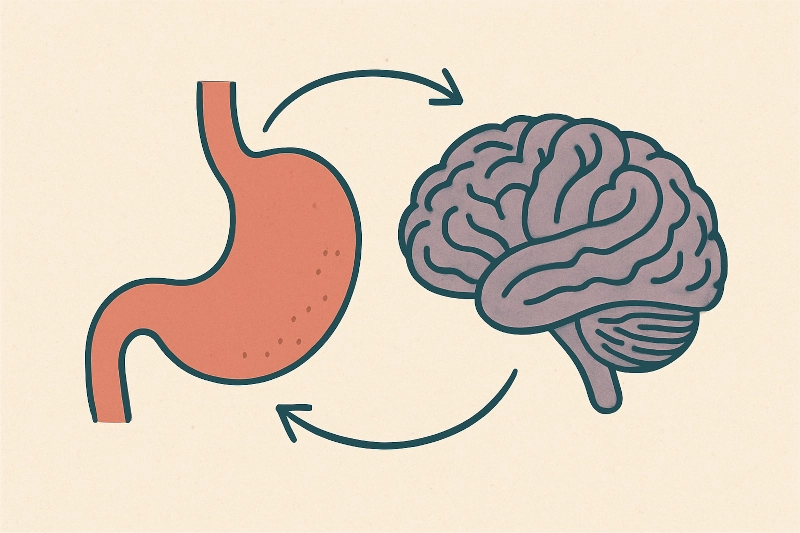
If you've typed "fiber supplement" into a search bar, you're probably standing in a pharmacy aisle — or a browser tab — staring at five powders, capsules, and gummies that all promise the same vague thing: "better digestion." The uncomfortable truth: most of them work, at least a little. But they are not interchangeable, and the dose on the label is frequently smaller than the dose the research actually used. This guide breaks down what a fiber supplement does, which type fits which problem, how much you really need, and when skipping the supplement and eating more beans is the better call.
Short version: if you already eat a reasonable amount of whole plant food, a supplement is a tweak. If you eat almost none, a supplement is a patch, not a cure — and the type you pick matters more than most marketing admits.
Affiliate Disclosure: The Buyers Angle is reader-supported. Some links in this article are affiliate links, and we may earn a commission if you buy through them — at no extra cost to you. That never changes which products we recommend or how we describe them.

What Is a Fiber Supplement, Really?
A fiber supplement is a concentrated source of dietary fiber — the part of plant food your digestive enzymes can't break down — sold as a powder, capsule, chewable, or gummy. Its job is to close the gap between how much fiber you eat and how much you're supposed to eat, and for most adults that gap is wide: average intake in the U.S. sits around 15 grams a day, roughly half of what the NIH Office of Dietary Supplements says most adults need.
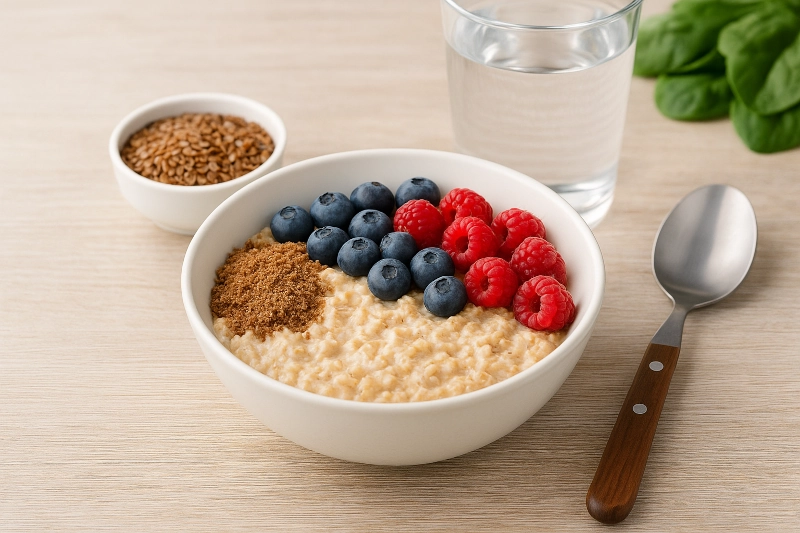
To put that gap in food terms: closing it from diet alone would mean adding roughly two extra cups of beans, or a few servings of oats, fruit, and vegetables, every single day — which is exactly the gap most fiber supplements are designed to narrow, not eliminate.
Soluble vs. Insoluble Fiber (the Label Doesn't Tell You Everything)
Soluble fiber dissolves in water and ferments in the colon, feeding gut bacteria and forming a gel that can slow digestion and modestly lower LDL cholesterol. Insoluble fiber adds bulk and speeds up transit time. Most supplements are a mix of both, and the soluble/insoluble split printed on the label is a rougher guide than marketing suggests — a 2017 review in the Journal of the Academy of Nutrition and Dietetics found that what actually predicts a fiber's effect is its viscosity and fermentability, not which bucket it falls into (McRorie & McKeown, 2017). In practice: a thick, gel-forming fiber like psyllium behaves very differently from a fine, low-viscosity one like wheat dextrin, even if both get labeled "soluble fiber" on the bottle — which is why two products with the same label can feel completely different in your gut.
Common Types of Fiber Supplements
- Psyllium husk — viscous, soluble, the type with the most human evidence behind it for both regularity and modest cholesterol reduction. Mixes gritty; needs water.
- Inulin / chicory root fiber — highly fermentable prebiotic fiber, cheap to produce and common in "gut health" blends, but also the type most associated with gas and bloating at normal doses.
- Methylcellulose — semi-synthetic, low fermentability, gentler on sensitive guts (less gas than inulin or psyllium), slightly weaker evidence for cholesterol effects.
- Wheat dextrin — low viscosity, dissolves clear, mild effect; easy to tolerate but less evidence for anything beyond basic bulking.
- Glucomannan — extremely viscous, used in satiety and blood-sugar products; needs to be taken with plenty of water, since it can swell before it's fully dissolved.
- Acacia (gum arabic) fiber — gentle prebiotic fiber, lower gas profile than inulin, popular in sensitive-stomach formulas.
If you want a side-by-side on specific brands rather than fiber types, we broke that down separately in our best fiber supplements comparison.
How Much Fiber Do You Actually Need?
U.S. dietary guidance puts the target at roughly 25 grams a day for women and 38 grams for men (about 14 grams per 1,000 calories), per the same NIH fact sheet. Most fiber supplements provide 3–6 grams per serving — meant to supplement a fiber-containing diet, not replace one. If your diet is close to zero fiber from food, no supplement dose will fully make up the difference; it's a top-up, not a substitute.
Does Fiber Supplementation Actually Work? What the Research Shows
For chronic constipation specifically, the evidence is reasonably solid. A systematic review in Alimentary Pharmacology & Therapeutics looking at fiber supplementation for chronic idiopathic constipation found that soluble, fermentable fibers — psyllium in particular — meaningfully improved stool frequency and consistency, while evidence for less-fermentable options like methylcellulose and wheat dextrin was weaker and more mixed (Christodoulides et al., 2016). The honest caveat: benefits build over one to four weeks of consistent daily use, not overnight — treat any product promising next-day results as a red flag, not a feature.
If constipation is the main complaint and you want options beyond supplements first, we've written separate guides on quick constipation relief (what works in 4–12 hours) and natural constipation relief for gentler, food-first approaches.
How to Choose a Fiber Supplement
Four things matter more than the brand name on the tub:
- Match the fiber to the goal. Regularity or cholesterol support → look for psyllium first. Sensitive, gas-prone gut → methylcellulose or acacia over inulin.
- Check the actual gram dose per serving, not just "with fiber" on the front label — some gummies deliver only 1–2 grams, well under the amounts used in the studies above.
- Scan for added sugar alcohols or artificial sweeteners, which can cause their own gas and bloating independent of the fiber itself.
- Mixability and realistic daily use — the best fiber on paper is useless if it's gritty enough that you stop taking it after a week.
One product that lands on the simpler end of that checklist is GoldenFrib, a psyllium-based blend built for daily regularity that avoids the chalky mixing complaints common with cheaper powders. It won't out-perform plain psyllium husk on evidence — no branded blend does — but it's a reasonable, convenient option if you've decided a supplement, rather than more beans and oats, is the right move for you.
See GoldenFrib's Official Site
Who Should Be Cautious With Fiber Supplements
Fiber supplements aren't risk-free for everyone. Be cautious — and talk to a doctor first — if any of the following apply:
- History of bowel obstruction, intestinal strictures, or recent GI surgery.
- Active flare of inflammatory bowel disease (Crohn's or ulcerative colitis) — fiber can worsen symptoms during a flare even though it may help during remission.
- You take thyroid medication, certain diabetes medications, or other drugs where fiber can slow or reduce absorption — space fiber supplements at least 2–4 hours apart from these medications.
- You're not drinking enough water — viscous fibers like psyllium and glucomannan need adequate fluid to move through the gut properly; taken dry or with too little water, they can swell before they should and, in rare cases, contribute to blockage.
- You're pregnant, breastfeeding, or already under a doctor's care plan that includes dietary restrictions.
Start at half the labeled dose for the first week and increase gradually — most bloating complaints about fiber supplements come from jumping straight to a full dose on day one.
The Verdict
A fiber supplement isn't a shortcut around a low-fiber diet, but it's a legitimate tool when real food isn't closing the gap — particularly for regularity and modest cholesterol support. The evidence is strongest for plain psyllium and weakest for proprietary blends that don't disclose their actual fiber dose per serving. Fiber also works best alongside a healthy gut microbiome, not instead of one — see our guide to probiotics for gut health for the other half of that equation, or our Gut Health 101 guide for the full picture on food, fiber, and digestion. If you've decided a supplement makes sense for you, GoldenFrib is a straightforward, psyllium-based option worth a look.
Check GoldenFrib's Current Price
FAQ
What is the best fiber supplement for constipation?
Psyllium husk has the strongest evidence for improving stool frequency and consistency in chronic constipation. Start with a low dose and increase it gradually while drinking plenty of water.
Can you take a fiber supplement every day?
Yes, for most healthy adults, daily use is fine once introduced gradually with adequate fluid. Check with a doctor first if you take medications that fiber can interfere with, since timing may need to be adjusted.
Do fiber supplements cause bloating and gas?
They can, especially highly fermentable types like inulin. Less-fermentable options such as methylcellulose or acacia fiber tend to cause less gas while still adding bulk.
How long does it take for a fiber supplement to work?
Most research shows measurable improvements in stool frequency within one to two weeks of consistent daily use, with fuller effects typically showing by around four weeks.
Is it better to get fiber from food or from a supplement?
Whole foods are preferred when possible — they deliver a broader mix of fiber types plus other nutrients a supplement can't replicate. Supplements are best used to close a gap, not to replace food-based fiber entirely.
Can you take too much fiber supplement?
Yes. Too much too quickly, especially without enough water, can cause bloating, gas, or cramping, and in rare cases contribute to a blockage. Stick to the labeled serving size and increase it slowly over several days.
References
- NIH Office of Dietary Supplements — Dietary Fiber Fact Sheet for Health Professionals
- McRorie JW, McKeown NM. "Understanding the Physics of Functional Fibers in the Gastrointestinal Tract." J Acad Nutr Diet. 2017.
- Christodoulides S, et al. "Systematic review: the effect of fibre supplementation on chronic idiopathic constipation in adults." Aliment Pharmacol Ther. 2016.